Coming from a family of civil servants, Albé Geldenhuys never in his wildest dreamt of starting his own business. He always pictured himself climbing the ranks in the police department, just like his father and grandfather.
After spending six years in the police service as a forensic artist, Albé became somewhat bored, and decided to go into sales at what was then known as the Health & Racquet club in Pretoria, Hatfield.
Growing up, he’s always been passionate about fitness and health. He was interested in the ways which nutritional supplements enhanced people’s health and performances….

…..more especially after the hype that surrounded ex-Springbok player Percy Montgomery, when his body started transforming by the aid of using creatine in the late 1990s.
The Beginning of USN
After the keen interest in sports nutrition, Albé started researching and reading everything he could about health supplements – from popular articles to scientific research and product reviews.

He saw an opportunity by realizing that although the supplement market was saturated at that time, most of those products were expensive imports, while the local ones were of poor quality.
To exploit this gap in the market, he sold his bakkie for R30 000 and bought creatine in bulk from supplement ingredient importers. He also bought a cheap Uno for making deliveries.

Albé had nothing to lose and everything to gain by selling unlabelled products at lower prices, while still making at least 60% gross profit.
When he started selling his homemade supplements, he wasn’t picky at all, he sold to everyone – family, friends, and people he met at the gym.
He had no strategy at all beyond just selling, selling, selling….
His homemade products started gaining the right attention when he started selling to Blue Bulls rugby players.

Albé’s initial idea was to make some money on the side. While he was busy selling, he realized customers wanted to be educated on the use, so he offered advice and word spread out fast and led to sales doubling each month.
The side hustle made around R20 000 in 4 months, which was a fortune to him, especially considering he was earning a measly R1800 in the police force.

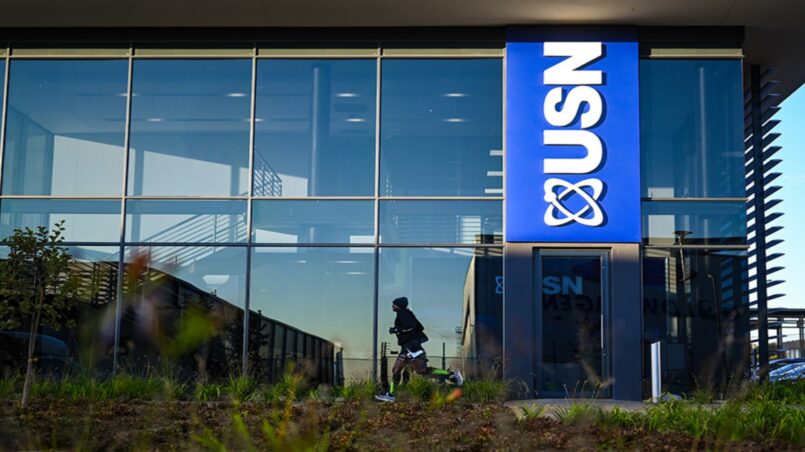
That’s when Albé realized there was a real business opportunity in the market. This prompted him to officially start his own company called Ultimate Sports Nutrition, abbreviated USN.
He branded the company USN because he realized that subconsciously, most people would associate the “US” in USN, as a product coming from the United States of America, which is a country normally perceived as being the best at everything.
He was also fortunate enough to rent out office space at the Council for Scientific and Industrial Research (CSIR), which allowed him to put their address on USN’s labels. This link to CSIR added more credibility to the brand.
He registered USN towards the end of 1999, and contracted ChemPure as a partner to mass produce the formulas.
After agreeing to help the small company, sales surged from R20 000 a month to R160 000 within a period of 4 months.
According to Albé, he differentiated USN’s products from the local crowd by making them of the same quality as those imported, but slightly cheaper in price, as they were manufactured locally.
Breaking Into Retail
The valuable network he made while still working at Health & Racquet, allowed him to sell his products there for the first time he went into retail.
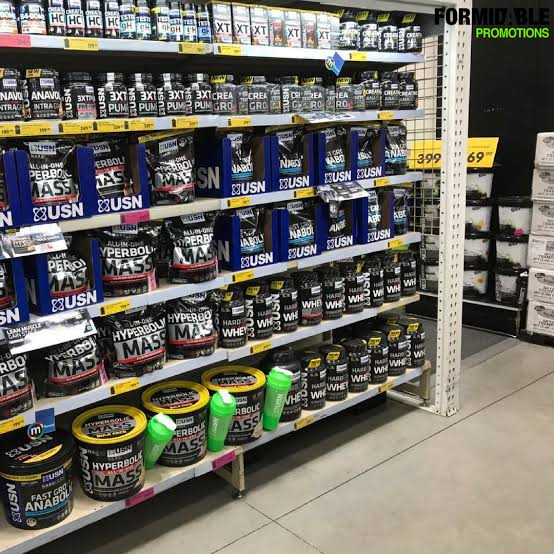
By 2002, many products of USN made their way into health shops and pharmacies across the country, with a monthly turnover in the millions.
There was a very small marketing budget as the products were selling themselves through word of mouth…
…but after hitting a ceiling, he started using brand ambassadors to promote the products – with the first one being former rugby player, Jaco van der Westhuizen, who worked his way into the Springbok team after being injured, using USN products.
Albé continued outsourcing his manufacturing and worked with various labs and R&D teams to develop products based on market trends and his own ideas.
This arrangement was a success because his overheads were minimal and also his personal cost of living was very low.
Branching Out

After realizing the South African market was small waters, Albé maintained the company’s momentum by expanding USN products to other countries including the likes of USA, UK, France, Russia various European countries, China and Mexico.
But….
USN’s rise to the top hasn’t always been a smooth sailing, Albé made costly mistakes that nearly brought the company to its knees.

While building the brand overseas, he gave one of his previous CEO too much freedom, which costed the company a loss of R12 million from a projected R28 million profit that year.
He managed to get the company on track again by hiring former PSG director, Jurie Bezuidenhout in 2010.
Jurie took the company into a new growth phase and improved efficiencies, by stripping the company of dead weight and outsourcing production, logistics and R&D
In Closing

Albé says aspiring entrepreneurs should start small and gradually grow in the market as they become familiar with it.
And they must also take note that strategies which worked in the past, wouldn’t necessarily work in new markets, so its important that they team up with local companies that better understand the market, language and culture.