

Nestled on the picturesque Meintjieskop in Pretoria, the Union Buildings stand as an architectural marvel and a powerful symbol of South African history and governance.
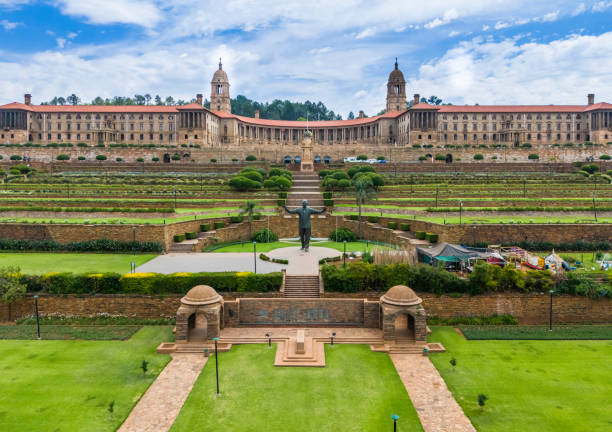
These magnificent structures, spanning nearly 300 meters in length, have been witness to some of the most transformative moments in the nation’s journey.
Here are 10 fascinating facts that reveal the depth, complexity, and intrigue behind this iconic landmark.
- Architectural Marvel: The Union Buildings were designed by Sir Herbert Baker, a prominent British architect, and took six years to complete, finally being finished in 1913. The massive complex is considered one of the finest examples of Edwardian architectural style in South Africa.
- Massive Scale: The building complex spans an impressive 285 meters in length and is built entirely from local sandstone. It covers an area of approximately 6.7 acres, making it one of the largest government building complexes in the world.
- Symbolic Design: The buildings are deliberately symmetrical, with two wings representing the two official languages of South Africa at the time – English and Afrikaans – symbolizing unity and reconciliation between different cultural groups.
- Nelson Mandela’s Significance: The Union Buildings gained immense historical importance on 10 May 1994, when Nelson Mandela was inaugurated as South Africa’s first democratically elected president in front of the building, symbolizing a new era for the nation.
- Unique Architectural Features: The building incorporates numerous decorative elements, including elaborate arches, detailed stonework, and terraced gardens that blend the structure seamlessly with the surrounding landscape.
- Presidential Headquarters: While not the official residence of the President, the Union Buildings serve as the administrative offices of the President of South Africa and house several government departments.
- Geographically Strategic Location: The buildings are strategically positioned on Meintjieskop, a prominent hill in Pretoria, providing a commanding view of the city and symbolizing governmental authority.
- Wartime Conversion: During World War II, the buildings were partially converted for military administrative purposes, showcasing its adaptability beyond typical governmental functions.
- Extensive Gardens: The grounds surrounding the Union Buildings feature meticulously designed gardens with over 350 plant species, making it not just an administrative complex but also a botanical showcase.
- Controversial History: Before becoming a symbol of national unity, the buildings were originally constructed during the period of racial segregation, representing the administrative center of the apartheid government. Today, they stand as a powerful symbol of democratic transformation.


