
For most of its water supply, South Africa depend on dams, rivers, and underground. That’s because the country doesn’t get a lot of rain, less than 500 mm a year which thus makes it one of the 30 driest countries in the world.
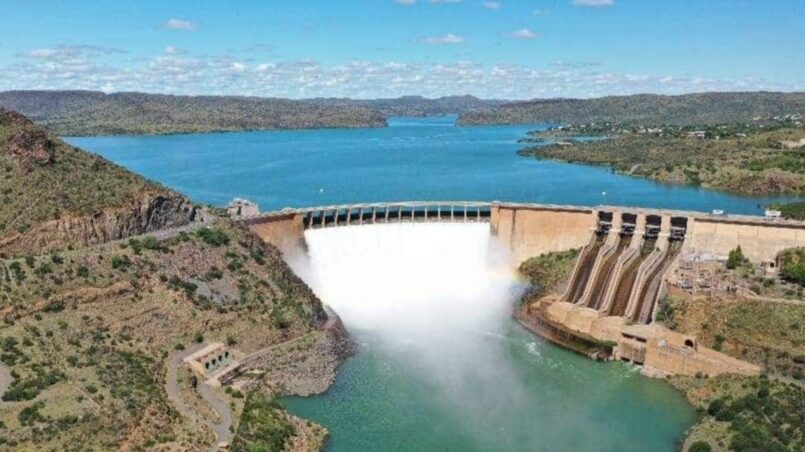
To make sure SA has enough water for its citizens and various industries, the government has built dams to store water. A dam is a wall of solid material built across a river to block the flow of the river.
Dams ensure that communities don’t run out of water in times of drought. Over half of SA’s annual rainfall is stored in dams. Dams also prevent flooding when there’s an overabundance of water.
There’s over 500 dams in South Africa, with a total capacity of 37 000 million cubic metres.
Gariep Dam
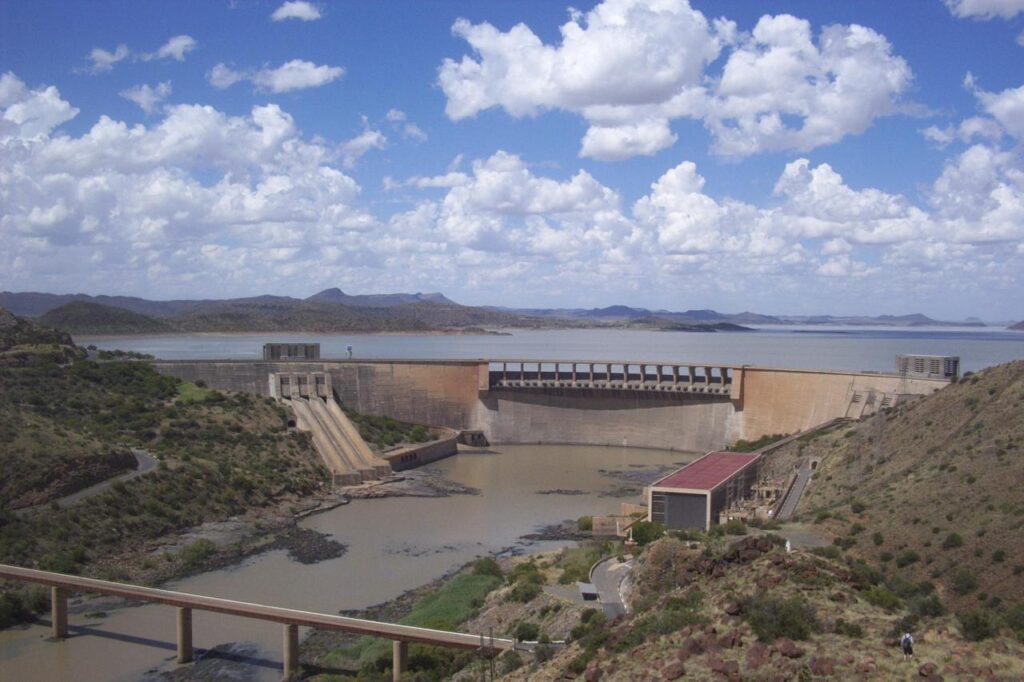
The Gariep Dam has the largest storage capacity in South Africa. Constructed during the apartheid era, it stores water from the Orange River in a 100 km-long dam with a surface area of 374 km2.
Gariep Dam can store about 5 500 million cubic metres. The dam is built mostly of concrete, shaped like an egg shell and its wall is approximately 88m high and contains about 1 73 million m3 of concrete.
The dam is part of the Orange River Irrigation Project, which was started in
1966 with the sole intention of providing water for the irrigation of 22 400 hectares of land for agricultural purposes.