
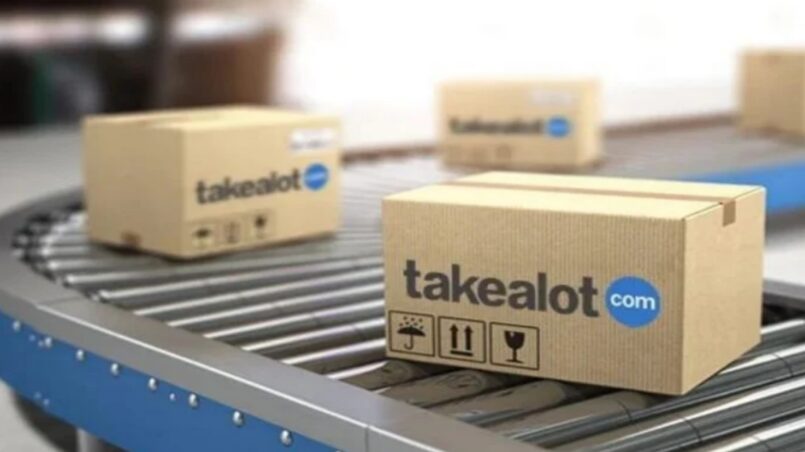
Takealot has helped revolutionized online shopping in South Africa. For over a decade long, Takealot has evolved from its humble beginnings at a warehouse in Montague Gardens to a continually expanding ecommerce giant, that has over 2500 people on its payroll.

Takealot was launched by Kim Reid in June 2011, he initiated the company with a simple goal in mind; to be the largest, easiest, most consumer centric online shopping destination in the continent of Africa.
The company has evolved massively ever since its inception, opening and expanding warehouses in Johannesburg and Cape Town. And also exploding its category selection to include Food, Beverages, Sports, Electronics, Fashion, Home & Kitchen and more…..
……while at the same time, taking control of its own logistics system with the purchase of Mr Delivery, now known as the Takealot Delivery Team.

As of January 2022, over 5000 third-party businesses boost their sales by leveraging Takealot’s online market, to sell millions of products and services to 2 million Takealot shoppers.
Background
To understand Takealot’s rise to the top, let’s take it back to the year 2000, when Kim Reid left Sony Music as a financial director and joined Multichoice as the company’s CFO.
After working at Multichoice for close to a year, Kim joined internet service provider, M-Web, in 2003 with an assurance that he’d increase its focus more on business clients.
He worked a few years at M-Web, then moved higher on the hierarchy of Naspers by joining MIH Africa, the company’s division responsible for handling its online businesses, including the deceased Kalahari.net.
Take2

In 2002, Neil Smith launched e-commerce site, Take2 and operated the site successfully with its value surging upwards.
In 2010, Take2 was acquired by US investment firm, Tiger Global Management. The firm claimed 83% of the acquisition, while Kim Reid held 15% as its new CEO and two other silent partners took the remaining 2%.

Reid hit the ground running as the CEO, as he changed Take2’s name to Takealot in 7 months after the acquisition. From then onwards, he launched Takealot’s first advertising campaign, to officially announce the company to the public.
Mr Delivery
In 2011, Takealot bought a minority stake logistics company, Mr Delivery, to speed up its goals of same-day deliveries. In early 2013, the company fully acquired Mr Delivery for an undisclosed amount.

Mr Delivery was then split the into two: Mr D Food, as an entirely app-focussed business and and Mr D Courier(later Takealot Delivery Team) a high-tech delivery operation geared for e-commerce speed and complexity.
In May 2014, Takealot secured a $100 million from its owner, Tiger Global, to further expand the online growth it was making in the country.
Takealot x Kalahari

In October 2014, Takealot and Kalahari announced a merger, the merger’s aim was to compete with both traditional retailers in South Africa and also global e-commerce giants such as Amazon.
The merger allowed both companies to trade separately and service their customers as usual through the festive season.
After 7 months into the merger and 17 years of existence, Kalahari.net was out of business.
“The stronger business survived”…..Reid said upon reflection in 2017.
Shortly after securing the Kalahari merger, Reid was also talking to another ecommerce competitor, Superbalist.
Superbalist

The fashion website had been looking for investors for some time after its launch in 2010, with no success whatsoever.
Before Tiger Global’s $100 million investment – Superbalist’s management had met with Reid. By August 2014, Takealot acquired 100% of Superbalist.
Unlike Kalahari, the Superbalist still exists to this day, as a Takealot subsidiary.
Naspers
The Kalahari merger gave Naspers a 46.5% stake in Takealot.

In 2017, Naspers sent shockwaves by investing R960 million in Takealot – which put it in control of the e-commerce site, with 53.5% of shares under its control.
Later that same year, Naspers bought out Tiger Global’s remaining stake in Takealot, leaving only a small number of shares in the hands of management.
Distribution Centers
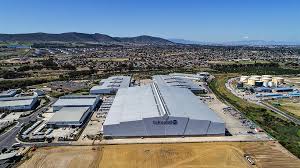
Takealot currently has distribution centres in the Gauteng, KwaZulu Natal and Western Cape totalling 75 000 m2. Its distribution center in Johannesburg houses close to 4 million products, and dispatches 10 000 parcels every hour.
CEO steps down….
In early 2021, after a decade long being Takealot’s CEO, Kim Reid stepped down from his position and became its chairperson.
He took a step back from handling the company’s day-to-day operations, to focus more on initiatives that will deliver future value for the e-commerce giant.